GHK-Cu Pen 50mg: A Research Peptide Product Guide
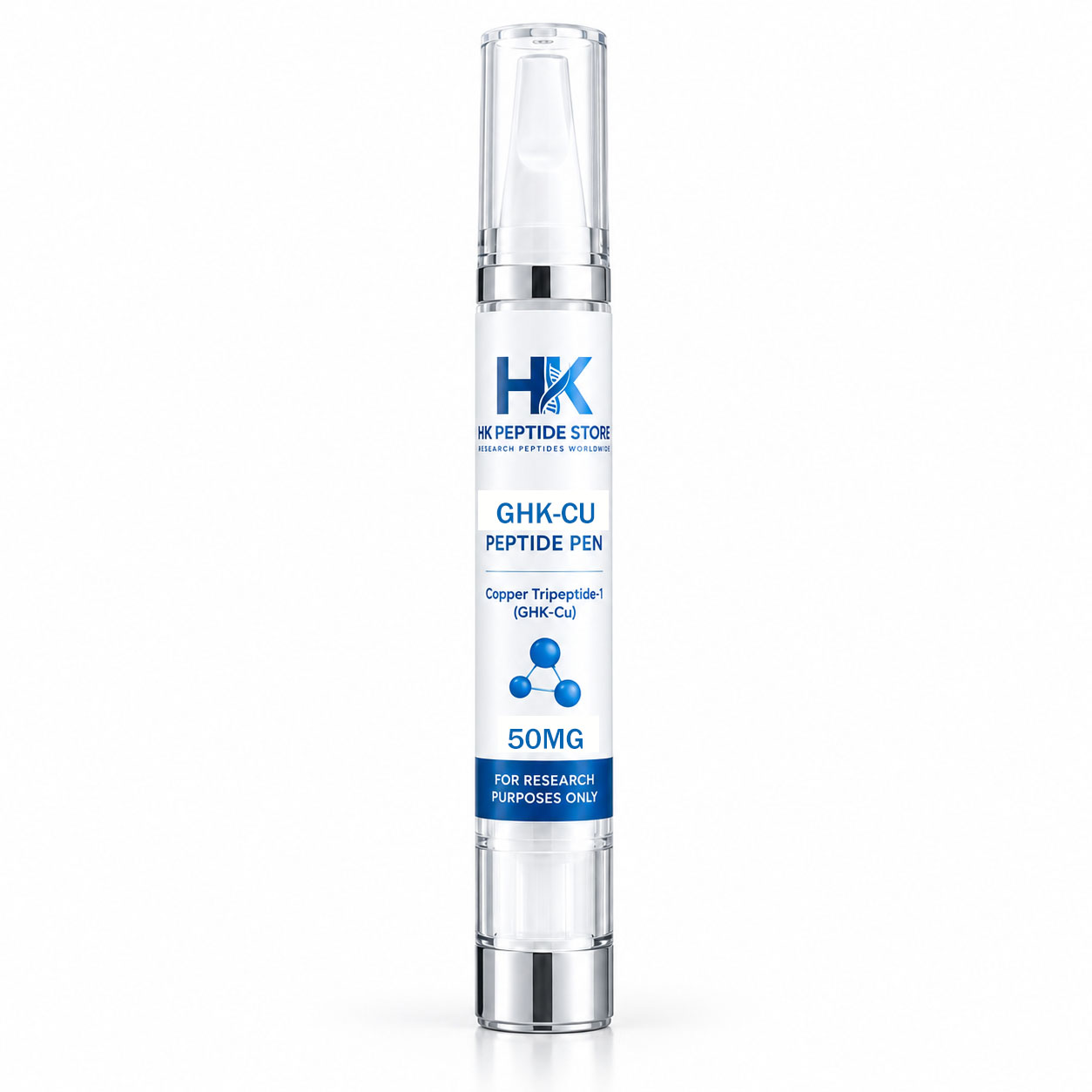
The GHK-Cu Pen 50mg is a pre-formatted copper peptide research product that delivers 50mg of the GHK-Cu peptide in a single pen-style device for laboratory use. GHK-Cu, also known as copper tripeptide-1, is a naturally occurring tripeptide studied for its role in skin remodeling, wound-healing pathways, and collagen-related research. This product is intended strictly for laboratory and research applications, not for human or veterinary use.
Researchers often value a self-contained delivery format because it reduces handling steps and improves consistency between experimental runs. The sections below explain what this GHK-Cu peptide product contains, how the pen format works, and how to plan related experiments responsibly. You can also review additional GHK-Cu research tools on the HK Peptide Store homepage.
What Is GHK-Cu and Why Does It Matter in Research?
GHK-Cu is a small copper-binding tripeptide made of glycine, histidine, and lysine (glycyl-L-histidyl-L-lysine), complexed with a copper(II) ion. It was first isolated from human plasma and has been studied extensively in dermatological and regenerative biology contexts. In research models, it is frequently examined for its influence on collagen synthesis, antioxidant activity, and tissue remodeling signals.
Because it is a naturally occurring peptide, GHK-Cu attracts interest from academic groups exploring wound healing, extracellular matrix biology, and age-related skin changes. Scientific reviews describe copper tripeptide-1 as one of the more investigated peptides in this space, though findings vary by model and methodology.
GHK-Cu vs. Other Copper Peptides
Copper peptides as a class include several variants, but GHK-Cu is the most referenced in the literature. Researchers comparing formulations should note that peptide identity, purity, and copper binding all affect experimental outcomes. A 50mg copper peptide product differs from cosmetic-grade copper peptide ingredients, which are not designed for controlled laboratory study.
Inside the GHK-Cu Pen 50mg Product
The pen format packages a GHK-Cu peptide formulation inside a cartridge-and-pen device. Each unit contains 50mg of GHK-Cu, giving researchers a defined quantity for reproducible protocols. The design mirrors the handling style of familiar pen injectors, which many lab professionals find intuitive for consistent dosing.
Key Product Details
- Peptide: GHK-Cu (copper tripeptide-1), 50mg per pen
- Format: Pre-filled pen-style research device
- Intended use: Laboratory research only
- Handling: Follow the supplier’s storage and reconstitution guidance
- Not for human or veterinary use: This is a research chemical, not a therapeutic product
How the Pen Format Helps Research Workflows
Pre-formatted pens can simplify bench workflows by reducing the number of transfer steps between containers. Fewer handling steps often mean less variability between samples. That consistency matters when a study depends on tightly controlled peptide concentrations.
GHK-Cu Peptide Formulation Considerations
A GHK-Cu peptide formulation must protect peptide integrity, maintain copper binding, and remain stable under appropriate storage conditions. Suppliers typically provide certificates of analysis (COA) documenting identity, purity, and concentration. Researchers should request these documents and verify that specifications match the study’s needs.
Purity and Quality Documentation
Purity is one of the most important variables in peptide research. HPLC and mass spectrometry data are standard verification methods for peptide identity and purity. Before ordering, confirm that the supplier publishes batch-level quality documentation. Reputable suppliers like HK Peptide Store make this information accessible to research buyers.
Storage and Handling Basics
Most research peptides require cool, dry, and light-protected storage, and reconstituted peptide solutions usually need refrigeration. Always follow the specific supplier guidance for the GHK-Cu pen you receive. External educational resources such as the U.S. National Library of Medicine can help researchers locate published studies on peptide stability.
Who Uses a GHK-Cu Pen for Research?
The typical audience includes academic researchers, laboratory technicians, and independent research groups investigating skin biology, wound healing, and peptide biochemistry. These buyers generally prioritize documentation, purity, and predictable handling over consumer convenience. A GHK-Cu pen for research suits bench work where defined peptide quantities reduce prep time.
Research Contexts Commonly Explored
Published literature examines GHK-Cu in cell culture, tissue remodeling models, and antioxidant assays. The National Center for Biotechnology Information hosts peer-reviewed papers on copper peptide biology that can guide study design. Researchers should always design protocols around their own institutional safety and ethics requirements.
GHK-Cu Research Peptide Compliance and Safety
GHK-Cu supplied for laboratory use is not approved by the U.S. Food and Drug Administration for human use. Researchers must comply with their institution’s chemical handling and disposal policies. The FDA publishes general guidance on research chemical oversight that laboratories can consult as a starting reference.
What This Product Is Not
This is not a cosmetic ingredient, dietary supplement, or medical treatment. Marketing language around copper peptides for skin care should not be confused with controlled research use. Keeping that distinction clear helps researchers choose appropriate materials.
Comparing 50mg Copper Peptide Options
A 50mg copper peptide product gives a defined total quantity, which helps researchers calculate concentrations for multi-week protocols. Before purchasing, compare purity levels, documentation, shipping conditions, and storage guidance across suppliers. Consistent quality documentation is often the clearest differentiator between research suppliers.
Where to Buy the GHK-Cu Pen 50mg
Researchers in the United States should order from suppliers that clearly state product identity, purity, and intended research use. Confirm shipping timelines and whether cold-chain handling is required for your region. You can explore the broader GHK-Cu product collection and review ordering details before purchase.
FAQ
Is the GHK-Cu Pen 50mg intended for human use? No. It is a research chemical intended for laboratory study only.
What is the difference between GHK-Cu and copper tripeptide-1? They are the same peptide; copper tripeptide-1 is a common technical name for GHK-Cu.
How should I store a GHK-Cu peptide pen? Follow the supplier’s instructions, which typically specify cool, dry, light-protected storage.
Do researchers need documentation before ordering? Yes. A certificate of analysis confirming purity and identity is standard practice.
What is the typical research use of GHK-Cu? Common areas include skin biology, wound-healing models, and collagen-related studies.
Is the product shipped within the United States? Availability varies; check current supplier details for shipping terms and timelines.
Be the first to review “GHK-Cu Pen 50mg”
Related products
Pure Peptides
Pure Peptides
Pure Peptides
Pure Peptides
Pure Peptides
Pure Peptides
Pure Peptides
Pure Peptides
Reviews
There are no reviews yet.