
Peptide Dosage Calculator: A Guide to Peptide Measurements and Safe Research
A Peptide Dosage Calculator can sound like a simple tool. However, calculating or interpreting the amount of a peptide involves more than entering a number into an online calculator. The correct amount of a medicinal peptide depends on the specific product, formulation, indication, patient characteristics, prescribing instructions, and regulatory status.
This is especially important in Europe, where medicines are subject to European and national regulatory frameworks. The European Medicines Agency (EMA) provides information about medicines authorized through the centralized EU procedure, while individual Member States maintain their own registers for nationally authorized medicines. (European Medicines Agency)
For research peptides, the situation is different. A research peptide is not automatically an approved medicine, and online availability does not establish safety or effectiveness for human use.
Therefore, a responsible peptide calculator should be understood primarily as an educational and measurement tool, rather than a replacement for a doctor, pharmacist, official product information, or an approved dosing schedule.
What Is a Peptide Dosage Calculator?
A peptide dosage calculator is an online tool designed to help users understand numerical relationships involving peptide quantities, concentrations, units, or other measurements.
Depending on the calculator, it may be designed for different purposes. Some tools are intended for healthcare professionals working with approved medicines. Others may be educational tools for understanding basic scientific measurements.
However, the word “dosage” can create confusion.
A calculated number does not automatically represent a medically appropriate dose.
For example, the same active substance may exist in different formulations, strengths, or delivery systems. An approved medicine can also have different instructions depending on its indication and patient population.
Consequently, a calculator should never be used to independently determine how much of an unapproved or research peptide a person should take.
Why Peptide Calculations Require Care
Peptides are biologically active molecules. Their effects can depend on the specific compound, formulation, route of administration, biological target, and other factors.
When dealing with approved medicines, official product information provides the appropriate instructions for use. The EMA’s medicine database, for example, provides information about centrally authorized medicines, while national medicine registers cover products authorized through national procedures. (European Medicines Agency)
This means that a generic online calculator cannot replace official medicine information.
A calculator may perform arithmetic correctly while still producing an inappropriate result if the underlying assumptions are wrong.
That distinction is critical.
Dosage Versus Concentration
One of the most important concepts to understand is the difference between dose and concentration.
A dose describes the amount of an active substance intended for administration.
Concentration describes how much active substance is present within a particular volume or quantity of a formulation.
These concepts are related, but they are not interchangeable.
A calculator that converts units or explains concentration does not determine whether a particular amount is medically appropriate.
For research purposes, scientists may work with concentrations and quantities as part of laboratory protocols. Those calculations should be based on the validated experimental protocol, appropriate laboratory procedures, and the specifications of the material being studied.
Why Units Matter in Peptide Research
Peptide research can involve several different units of measurement.
Depending on the scientific context, researchers may encounter:
- Micrograms
- Milligrams
- Grams
- Nanograms
- Millilitres
- Microlitres
- Molar concentrations
- Molecular weight
- Amount of substance
Confusing units can lead to significant errors.
For this reason, researchers should always check the units used in an experimental protocol before performing any calculation.
The same principle applies to medicinal products. Official product information should be followed rather than relying on a generic internet calculator.
Understanding Peptide Molecular Weight
Molecular weight is another important concept in peptide science.
Different peptides have different molecular weights because their amino-acid sequences and chemical structures differ.
Researchers may use molecular-weight information when converting between mass-based and molar measurements for laboratory experiments.
For example, analytical research may require scientists to understand the relationship between:
Mass → Molecular Weight → Amount of Substance → Concentration
These relationships are fundamental to laboratory science.
However, a molecular-weight calculation should not be interpreted as a recommendation for human dosing.
Why Research Peptides Are Different From Medicines
One of the most important points when discussing a peptide dosage calculator is the distinction between research peptides and approved medicines.
A research peptide may be supplied for laboratory investigation. It may be used to study molecular interactions, biological pathways, peptide stability, analytical characteristics, or other scientific questions.
That does not mean that the product has been evaluated as a medicine.
By contrast, authorized medicines are subject to regulatory assessment.
The EMA explains that it evaluates applications for marketing authorization through the centralized procedure and monitors medicines throughout their lifecycle. Nationally authorized medicines are handled through individual Member State systems. (European Medicines Agency)
Therefore, researchers should not use a research peptide calculator to create a human treatment schedule.
Peptide Dosage Calculators and Approved Medicines
For approved peptide medicines, the appropriate source for dosing information is the official product information.
The EMA’s medicine pages provide regulatory and scientific information for centrally authorized medicines. For example, the EMA’s page for Wegovy identifies semaglutide as its active substance and provides its authorized indications and regulatory information. (European Medicines Agency)
The EMA also emphasizes that practical instructions for using medicines should be obtained from the product information, such as the package leaflet, or from a healthcare professional. (European Medicines Agency)
Therefore, users should not rely on a generic calculator when official instructions are available.
Why European Regulation Matters
Europe does not operate as one completely uniform retail medicine market.
The EU has centralized authorization procedures, while medicines can also be authorized through national procedures in individual Member States. The EMA provides links to national registers of authorized medicines for this reason. (European Medicines Agency)
This matters when evaluating peptide products online.
A website selling or discussing a peptide does not automatically establish that the product is authorized as a medicine in every European country.
Researchers and consumers should therefore verify the regulatory status of a medicinal product through the appropriate national or European authority.
Buying Medicines Online in Europe
The European Commission has established a common logo for legally operating online pharmacies and medicine retailers.
The logo is designed to help consumers identify legitimate online medicine sellers. Importantly, the Commission explains that the logo should link to the relevant national authority’s list of legally operating pharmacies or retailers. (Public Health)
This provides a useful safety principle:
Do not rely only on the appearance of an online store. Verify its regulatory status.
The European Commission also warns that falsified medicines can contain incorrect ingredients, incorrect amounts, or harmful substances. (Public Health)
This is especially relevant for popular peptide-related medicines sold online.
Why a Calculator Cannot Verify a Peptide
A calculator performs mathematics.
It cannot independently confirm:
- Peptide identity
- Purity
- Sterility
- Authenticity
- Stability
- Manufacturing quality
- Regulatory authorization
- Clinical effectiveness
- Patient suitability
This distinction is essential.
A mathematically correct result can still be scientifically or medically inappropriate if the input information is incorrect.
Therefore, a peptide calculator should be considered one small part of a broader information process.
Peptide Quality and Analytical Testing
For research peptides, quality evaluation is especially important.
Researchers may review analytical documentation such as:
HPLC
High-performance liquid chromatography can provide information about chromatographic purity and sample composition.
Mass Spectrometry
Mass spectrometry can provide molecular-mass information and support peptide identity assessment.
Certificate of Analysis
A Certificate of Analysis, or CoA, can provide batch-specific information about analytical results.
Batch Identification
A batch or lot number can connect a physical sample to its associated documentation.
These forms of documentation are more useful for evaluating research materials than simply relying on a product name or an advertised purity percentage.
What a Responsible Peptide Calculator Should Explain
A responsible educational peptide calculator page should clearly explain its limitations.
It can help users understand concepts such as:
- Measurement units
- Concentration
- Molecular weight
- Scientific notation
- Basic laboratory mathematics
- Unit conversion
- Research terminology
It should not encourage users to determine personal treatment schedules for unapproved peptide products.
This distinction can make the tool more scientifically responsible.
Common Peptide Calculation Mistakes
Even simple calculations can become problematic when users enter incorrect information.
Mixing Units
Using milligrams in one field and micrograms in another without proper conversion can create a large numerical error.
Using the Wrong Molecular Weight
Different peptides have different molecular weights. Modified peptides may also differ from their unmodified counterparts.
Confusing Concentration With Amount
A concentration describes an amount relative to a volume or other quantity. It is not automatically the same thing as a dose.
Using Incorrect Product Information
A calculator cannot correct incorrect information entered by the user.
Treating a Calculation as Medical Advice
This is perhaps the most important mistake.
A numerical result does not establish that the amount is appropriate for a particular person.
Peptide Calculators for Laboratory Research
Researchers may encounter legitimate situations where peptide calculations are necessary.
For example, a laboratory protocol may require a particular concentration or amount of material.
In those situations, calculations should be based on the validated experimental protocol.
Researchers should consider:
- The exact peptide identity
- Molecular weight
- Purity
- Experimental concentration
- Final volume
- Laboratory protocol
- Required controls
- Applicable safety procedures
The calculation should support the research protocol rather than replace it.
Why Documentation Improves Research Accuracy
Good documentation is one of the foundations of reproducible science.
Researchers should record the information used in calculations, including relevant product specifications and batch information.
A laboratory record may include:
Peptide: Exact product identity
Batch: Lot number
Molecular weight: Verified value
Purity: Reported analytical result
Protocol: Relevant experimental procedure
Concentration: Protocol-defined value
Date: Date of preparation or experiment
Researcher: Person responsible for the experiment
Maintaining these records makes it easier to reproduce or investigate results.
How to Evaluate an Online Peptide Calculator
Before using an online calculator, ask several questions.
Is the Purpose Clearly Explained?
A trustworthy tool should explain what the calculator is designed to calculate.
Are the Units Clearly Identified?
Every input and output should have an obvious unit.
Are the Assumptions Visible?
Users should understand what information the calculation depends on.
Does the Tool Distinguish Research From Medical Use?
This is particularly important for peptide-related websites.
Does It Encourage Professional Guidance?
For approved medicines, users should be directed toward official product information and appropriate healthcare professionals.
These principles can make a calculator easier to understand and safer to use.
Peptide Research Across Europe
Peptide research continues to attract interest throughout Europe.
Scientists are investigating peptides across fields such as:
- Drug discovery
- Molecular biology
- Metabolic science
- Biotechnology
- Cellular signaling
- Pharmaceutical development
- Analytical chemistry
- Drug-delivery research
The growing scientific interest in peptide medicines is also reflected in recent regulatory activity.
For example, the EMA has evaluated and authorized peptide-related medicines including semaglutide-containing products. The Agency’s medicine information provides details about authorized indications and regulatory status. (European Medicines Agency)
At the same time, the EMA has warned about illegal medicines sold online, including falsified products marketed as GLP-1 receptor agonists such as semaglutide, liraglutide, and tirzepatide. (European Medicines Agency)
This makes careful verification increasingly important.
The Difference Between Educational Calculations and Medical Decisions
A useful way to understand a peptide calculator is to separate mathematics from medical decision-making.
A calculator can answer a mathematical question.
A healthcare professional determines whether a medicine is appropriate for a patient.
A regulatory authority determines whether a medicine is authorized for specific uses.
A research laboratory determines the appropriate experimental conditions for its protocol.
These are different responsibilities.
Keeping them separate helps prevent online calculators from being misunderstood.
A Better Approach to Peptide Information
When researching peptides online, users can follow a simple information hierarchy.
Step 1: Identify the Peptide
Determine the exact compound, formulation, and intended purpose.
Step 2: Establish Its Status
Determine whether it is a research material, an authorized medicine, or another type of product.
Step 3: Review Official Information
For medicines, consult the relevant European or national regulatory authority and official product documentation.
Step 4: Check the Scientific Literature
For research applications, examine peer-reviewed scientific sources and relevant experimental evidence.
Step 5: Evaluate Product Documentation
For research materials, review available analytical information, batch records, and Certificates of Analysis.
Step 6: Use Calculators Carefully
Use calculators for appropriate mathematical or educational purposes rather than using them to create unsupervised treatment schedules.
Why Peptide Safety Should Come First
Peptide-related information is increasingly available online.
However, more information does not always mean better information.
A responsible approach should prioritize:
Evidence → Documentation → Regulation → Professional Guidance → Appropriate Calculation
This is particularly important when a peptide is biologically active or associated with a prescription medicine.
The European Medicines Agency states that prescription medicines such as certain GLP-1 receptor agonists should be used under medical supervision. (European Medicines Agency)
Therefore, people should not use online calculators as substitutes for medical supervision.
The Future of Peptide Calculators
Future peptide calculators may become more sophisticated.
Educational tools could potentially provide better unit conversion, molecular-weight calculations, concentration explanations, scientific references, and laboratory documentation features.
However, better technology does not eliminate the need for scientific judgment.
The most useful calculators will likely be those that clearly explain their assumptions and limitations.
For research environments, calculators may also become integrated into digital laboratory workflows where calculations can be documented alongside experimental protocols.
That could improve traceability and reduce avoidable mathematical errors.
Conclusion
A Peptide Dosage Calculator can be useful when its purpose is clearly defined and its limitations are understood.
For research, calculators can help explain measurements, concentrations, molecular weight, unit conversions, and other scientific concepts. However, they should not be used to determine personal treatment schedules for research peptides or unapproved compounds.
For authorized medicines in Europe, users should rely on official product information, national medicine authorities, pharmacists, and healthcare professionals. The EMA provides information about centrally authorized medicines, while Member States maintain national medicine registers for products authorized through national procedures. (European Medicines Agency)
When purchasing medicines online, European Commission guidance also recommends verifying legitimate online pharmacies through the official EU logo and national authority listings. (Public Health)
Ultimately, a calculator can perform mathematics, but it cannot determine medical suitability.
For researchers, the safest and most scientifically useful approach is to combine accurate calculations with validated protocols, reliable analytical documentation, appropriate laboratory procedures, and a clear understanding of regulatory requirements.
Frequently Asked Questions About Peptide Dosage Calculators
What is a peptide dosage calculator?
A peptide dosage calculator is an online tool that may help users understand numerical relationships involving peptide quantities, concentrations, or units. It should not be considered a substitute for medical advice or official prescribing information.
Can a peptide calculator tell me how much peptide to take?
A generic online calculator should not be used to determine how much of a research peptide or unapproved compound a person should take. For approved medicines, follow the official product information and advice from an appropriate healthcare professional.
Can researchers use peptide calculators?
Yes. Researchers may use mathematical tools for appropriate laboratory calculations, provided the calculations are based on their validated research protocol and correct product information.
What is the difference between peptide dose and concentration?
Dose refers to an amount of an active substance, while concentration describes the amount relative to a particular volume or quantity. They are related concepts but are not interchangeable.
Why is molecular weight important?
Molecular weight can be used in scientific calculations involving mass and amount of substance. Researchers should always verify the molecular weight for the exact peptide or modified peptide being studied.
Are research peptides approved medicines?
Not necessarily. A research peptide may be supplied for scientific investigation without being authorized as a medicine.
Does online availability mean a peptide is legal or approved in Europe?
No. Online availability does not establish that a product has been authorized as a medicine. The relevant European or national regulatory authority should be consulted.
How can I verify a medicine in Europe?
The EMA provides information about centrally authorized medicines, while national registers cover medicines authorized through national procedures. (European Medicines Agency)
Is it safe to buy peptide medicines from any website?
No. The European Commission warns about falsified medicines sold online and recommends verifying legally operating online pharmacies through the official EU logo and national authority listings. (Public Health)
What information should researchers record when calculating peptide concentrations?
Researchers should record the exact peptide identity, molecular weight, relevant purity information, batch number, protocol, units, concentration requirements, and other information required by their laboratory procedures.
Can a calculator verify peptide purity?
No. A calculator cannot verify purity or authenticity. Researchers should rely on appropriate analytical testing and documentation such as HPLC results, mass spectrometry, and batch-specific Certificates of Analysis where applicable.
What is the safest approach to peptide dosage information?
For approved medicines, use official product information and consult a qualified healthcare professional. For research peptides, follow the validated laboratory protocol and applicable research requirements rather than using an online calculator to create a human dosing schedule.
Pure Peptides
Pure Peptides
Pure Peptides
Pure Peptides
Pure Peptides
Pure Peptides
Pure Peptides
Pure Peptides
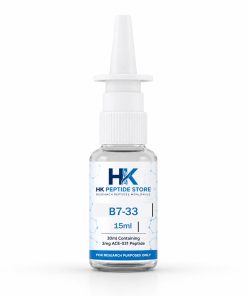
Pure Peptides
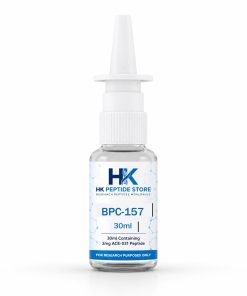
Pure Peptides
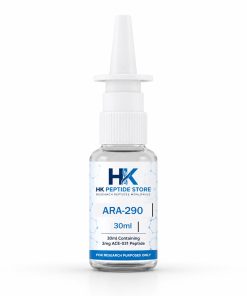
Pure Peptides
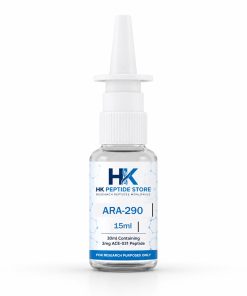
Pure Peptides
Here is Part 2, continuing the Europe-focused Peptide Dosage Calculator article with a stronger emphasis on calculations, laboratory use, quality control, European regulatory considerations, and responsible peptide research.
Peptide Dosage Calculator: Understanding Peptide Calculations for Research
A Peptide Dosage Calculator can be useful for understanding the mathematics behind peptide measurements. However, accurate calculations require more than entering numbers into an online tool. Researchers need to understand units, molecular weight, concentration, purity, formulation, and the purpose of the calculation.
This becomes particularly important when working with research peptides in Europe. Research materials are not automatically equivalent to authorized medicines, and a mathematical calculation does not establish that a particular amount is suitable for human use.
For laboratory research, calculations should always follow the requirements of the relevant experimental protocol. For approved medicines, users should follow official product information and professional medical guidance.
This guide continues our discussion by explaining the scientific principles behind peptide calculations and how researchers can approach them more carefully.
Understanding the Mathematics Behind Peptide Calculations
At its simplest, peptide calculation involves relationships between amount, concentration, volume, molecular weight, and purity.
Researchers may encounter several different types of calculations depending on their experimental design.
For example, a laboratory may need to determine the concentration of a peptide solution, convert between measurement units, or calculate the amount of substance represented by a particular mass.
These are mathematical questions.
They are different from determining a medically appropriate dose for an individual.
Keeping this distinction clear is essential.
Mass-Based Peptide Measurements
Peptides are frequently described using mass units.
Common units include:
-
Nanograms (ng)
-
Micrograms (µg)
-
Milligrams (mg)
-
Grams (g)
The relationship between these units is based on standard metric conversions.
For example:
1 milligram = 1,000 micrograms
and:
1 microgram = 1,000 nanograms
Simple unit conversions can therefore be handled mathematically.
However, errors can occur when users enter a value in one unit while assuming that the calculator is using another.
A good peptide calculator should clearly display the unit associated with every input and output.
Concentration Calculations
Concentration is another important concept in peptide research.
A concentration describes the amount of a substance relative to a defined volume or quantity.
In laboratory environments, researchers may encounter expressions such as:
-
mg/mL
-
µg/mL
-
ng/mL
-
mol/L
-
mmol/L
The appropriate unit depends on the experiment.
For example, researchers working with analytical assays may use molar concentration, while other laboratory protocols may specify a mass concentration.
A calculator can help perform the mathematical conversion, but researchers must first know which concentration their experimental protocol requires.
Why Molecular Weight Matters
Molecular weight becomes especially important when converting between mass-based measurements and molar quantities.
Different peptides have different molecular weights because their amino-acid sequences and chemical structures differ.
A peptide with a larger molecular weight contains fewer molecules per unit mass than a peptide with a smaller molecular weight.
This relationship matters in laboratory science because researchers may need to compare compounds on a molar basis rather than simply comparing their mass.
Molecular Weight and Moles
The general scientific relationship is:
Amount of substance = Mass ÷ Molecular Weight
This equation is useful for laboratory calculations.
However, researchers must use the correct molecular weight for the exact material being studied.
Modified peptides can have different molecular weights from their unmodified counterparts. Therefore, researchers should verify the molecular information supplied with the research material.
Peptide Purity and Calculations
Purity can also affect laboratory calculations.
Suppose a research material contains a primary peptide along with measurable impurities. The labeled mass of the material may not represent the exact mass of the target peptide itself.
Researchers may therefore need to consider the reported analytical purity when their validated protocol requires it.
This is one reason why a Certificate of Analysis can be useful.
A CoA may provide information about:
-
Reported purity
-
Peptide identity
-
Molecular weight
-
Batch number
-
Testing method
-
Analytical results
Researchers should use the documentation relevant to the specific batch whenever possible.
Why a Certificate of Analysis Matters
A Certificate of Analysis provides information about the characteristics of a particular product or batch.
However, researchers should understand what a CoA can and cannot establish.
A CoA may provide evidence about specific analytical characteristics. It does not automatically establish that a research peptide is suitable for human administration.
This distinction is important.
For research purposes, the CoA can support documentation and traceability. It can help researchers understand what material they received and connect it to the corresponding analytical results.
Batch Numbers and Peptide Calculations
Batch numbers may seem like administrative information, but they can be scientifically useful.
Consider a laboratory that performs an experiment using one peptide batch and later repeats the experiment using another.
If the results are different, researchers may need to determine whether the research material differed between experiments.
A batch number allows the laboratory to trace each sample back to its documentation.
Researchers should therefore record:
-
Product name
-
Batch number
-
Supplier
-
Date received
-
Purity information
-
Molecular weight
-
Relevant analytical data
-
Storage conditions
-
Experimental protocol
This information can support better reproducibility.
Peptide Calculators and Laboratory Protocols
A calculator should never replace a validated research protocol.
Instead, it should support the protocol.
For example, a laboratory protocol may specify a particular concentration, volume, analytical condition, or experimental range. The calculator can help researchers perform the required mathematics.
The protocol remains the source of the experimental instruction.
This distinction reduces the risk of turning a generic online calculation into an unsupported experimental decision.
Why Researchers Should Verify Inputs
A calculator can only be as accurate as the information entered into it.
Before performing a calculation, researchers should verify:
Peptide Identity
Make sure the exact peptide is being evaluated.
Molecular Weight
Confirm the molecular weight from reliable documentation.
Units
Check that every value uses the intended unit.
Purity
Review relevant analytical information when purity affects the calculation.
Volume
Confirm the correct volume and unit.
Protocol Requirements
Make sure the calculation corresponds to the laboratory’s approved procedure.
These checks can prevent many common mathematical errors.
Common Errors in Peptide Calculations
Even experienced researchers can make mistakes when calculations involve several unit conversions.
Error 1: Confusing Milligrams and Micrograms
A thousand-fold difference exists between these units.
Error 2: Using an Incorrect Molecular Weight
A wrong molecular-weight value can affect molar calculations.
Error 3: Mixing Volume Units
Millilitres and microlitres must be handled consistently.
Error 4: Ignoring Peptide Modifications
A modified peptide may not have the same molecular weight as the parent compound.
Error 5: Copying Values From an Unverified Source
Product information should come from reliable documentation.
Error 6: Treating a Calculation as a Dose Recommendation
A mathematical output does not determine whether a particular amount is appropriate for human use.
These errors demonstrate why calculations should be reviewed carefully.
Research Peptides and Human Dosing Are Different
The phrase “peptide dosage” can sometimes create confusion because the same word may appear in both research and medical contexts.
For an approved medicine, dosage information forms part of the official product information.
For a research peptide, an experimental protocol may define concentrations or quantities for a specific laboratory investigation.
These situations should not be treated as equivalent.
A research calculation is connected to an experiment.
A medical dose is connected to an authorized medicine, an approved indication, and an individual clinical situation.
European Medicine Regulation
European researchers and consumers should also consider regulatory status.
The European Medicines Agency provides information about medicines authorized through the centralized European procedure. However, many medicines are authorized through national procedures in individual European countries.
The EMA provides access to information about nationally authorized medicines through national registers. This means that the regulatory status of a product should be checked through the appropriate European or national authority rather than inferred from an online store.
This distinction becomes particularly important when researching popular peptide-related medicines.
How to Verify an Authorized Medicine
When a peptide is being discussed as a medicine, researchers and consumers should identify the exact medicinal product.
Useful information includes:
-
Active substance
-
Brand or product name
-
Marketing authorization
-
Approved indication
-
Official product information
-
Country of authorization
-
Prescription status where applicable
The EMA’s medicine database provides information for centrally authorized products.
National regulatory authorities provide additional information for medicines authorized through national procedures.
This approach is more reliable than relying on an online product description.
Online Medicine Safety in Europe
Online purchasing creates another important consideration.
The European Commission has established a common logo intended to help consumers identify legally operating online pharmacies and medicine retailers.
The logo should connect users to the relevant national authority’s register. This allows consumers to verify whether the online seller is legally registered.
This is particularly important because falsified medicines can be marketed through websites that appear legitimate.
The European Commission warns that falsified medicines can contain incorrect ingredients, incorrect quantities, or potentially harmful substances.
Therefore, online appearance should never be treated as proof of authenticity.
Research Peptide Quality Control
For research materials, quality control requires a different approach.
Researchers should consider analytical evidence such as:
Identity: Is the material consistent with the expected peptide?
Purity: What analytical result has been reported?
Molecular Weight: Does the measured or reported molecular information correspond to the expected material?
Batch: Can the sample be traced to a particular lot?
Documentation: Is a relevant CoA available?
Storage: Are appropriate conditions documented?
Testing: What analytical methods were used?
These questions provide a stronger framework than simply searching for the highest advertised purity.
Using Peptide Calculators Responsibly
A responsible calculator should make its purpose clear.
It may help users understand:
-
Unit conversions
-
Concentration mathematics
-
Molecular-weight relationships
-
Mass calculations
-
Scientific notation
-
Basic laboratory calculations
It should also make its limitations clear.
For example, the calculator should not imply that its numerical output is a personalized medical recommendation.
This distinction protects users from confusing mathematical information with clinical advice.
What Information Should a Research Calculator Request?
The exact inputs depend on the calculation being performed.
However, an educational research calculator may involve information such as:
-
Peptide molecular weight
-
Starting mass
-
Desired concentration
-
Total volume
-
Measurement units
-
Purity information where relevant
Each field should have a clear explanation.
The user should also be able to see the units associated with the calculation.
Clear interface design is important because ambiguous inputs can produce misleading results.
What a Calculator Cannot Determine
A peptide calculator cannot independently determine:
-
Whether a peptide is authentic
-
Whether it is pure
-
Whether it is sterile
-
Whether it is stable
-
Whether it is safe for human use
-
Whether it is legally authorized
-
Whether it is appropriate for a specific patient
-
Whether a research protocol is scientifically valid
These questions require other forms of evidence.
Analytical laboratories, regulatory authorities, healthcare professionals, and research institutions each have different roles in answering them.
Creating a Better Peptide Research Workflow
Researchers can integrate calculations into a broader workflow.
Step 1: Identify the Exact Peptide
Confirm the compound and any modifications.
Step 2: Review Analytical Documentation
Check relevant purity, identity, and molecular information.
Step 3: Confirm the Batch
Record the exact lot number associated with the material.
Step 4: Review the Experimental Protocol
Identify the required concentration, amount, volume, or other parameters.
Step 5: Perform the Calculation
Use appropriate mathematical tools and consistent units.
Step 6: Verify the Result
Check the calculation independently where appropriate.
Step 7: Record the Calculation
Maintain the result with the experimental documentation.
This workflow can help laboratories reduce avoidable calculation errors.
Why Independent Verification Is Useful
Important calculations can benefit from independent verification.
For example, a researcher may perform a calculation manually and then compare the result with a calculator or spreadsheet.
If two methods produce different results, the discrepancy should be investigated before proceeding.
This principle is especially valuable when calculations involve multiple conversions.
Independent verification does not need to be complicated.
A second calculation, spreadsheet formula, or laboratory software check can provide an additional layer of confidence.
Peptide Calculators and Digital Research
As scientific software becomes more sophisticated, peptide calculators may become integrated with digital laboratory systems.
Future tools could potentially connect calculations with:
-
Product records
-
Batch information
-
Molecular databases
-
Experimental protocols
-
Analytical results
-
Laboratory notebooks
Such integration could improve traceability.
However, automation should not eliminate scientific oversight.
Researchers should still verify inputs, understand the calculation, and ensure that the output matches the experimental requirements.
Why Simple Tools Can Still Be Valuable
A peptide calculator does not need to make medical decisions to be useful.
A well-designed educational calculator can help researchers and students understand scientific relationships more clearly.
For example, learning how molecular weight relates to molar concentration can help users better understand peptide chemistry.
Likewise, unit-conversion tools can reduce simple arithmetic errors.
The value comes from supporting understanding rather than replacing professional judgment.
Choosing Reliable Peptide Information Online
The calculator itself is only one part of the online research experience.
Researchers should also consider the quality of the information surrounding the tool.
Look for:
-
Clearly defined terminology
-
Transparent calculations
-
Visible units
-
Scientific references
-
Appropriate disclaimers
-
Research-use information
-
Regulatory context
-
Clear product documentation
Avoid websites that present a simple numerical output as though it were a personalized medical instruction.
How HK Peptide Store Can Present a Responsible Calculator
For HK Peptide Store, a peptide calculator can be positioned as an educational and research-support resource.
The page can explain the underlying mathematics while clearly distinguishing laboratory calculations from medical dosing.
It can also direct users toward appropriate documentation and encourage researchers to follow validated protocols.
This approach creates a more useful resource for researchers while avoiding the misleading impression that an online calculator can replace clinical or laboratory expertise.
The Future of Peptide Research in Europe
Peptide research is expected to remain an important area of European biotechnology and pharmaceutical science.
Advances in computational design, artificial intelligence, peptide synthesis, analytical chemistry, and drug-delivery technology are creating new opportunities for researchers.
At the same time, regulatory oversight continues to develop alongside scientific progress.
For researchers, this means that future peptide tools will likely place greater emphasis on traceability, documentation, analytical quality, and evidence-based decision-making.
Calculators may become more advanced, but their fundamental purpose should remain clear: helping users understand and perform appropriate calculations accurately.
Conclusion
A Peptide Dosage Calculator can be a useful educational and research tool when its purpose and limitations are clearly explained.
Researchers may use calculators to understand unit conversions, concentration, molecular weight, mass, and other scientific relationships. However, the calculator should support a validated laboratory protocol rather than replace it.
For approved medicines, dosing information should come from official product documentation and qualified healthcare professionals. In Europe, regulatory status should be verified through the EMA or the relevant national authority.
For research peptides, researchers should focus on identity, analytical testing, purity, batch documentation, molecular information, storage, and experimental requirements.
The most responsible approach combines accurate mathematics, reliable documentation, appropriate laboratory procedures, and clear regulatory awareness.
A calculator can provide the mathematics. It cannot provide the scientific judgment required to determine whether a peptide is suitable for a particular experiment or medical situation.
Frequently Asked Questions
Can a peptide dosage calculator be used for research?
Yes. A calculator can be useful for laboratory mathematics involving peptide mass, concentration, molecular weight, volume, and unit conversions. Calculations should follow the requirements of the relevant research protocol.
Can an online calculator determine a safe human peptide dose?
No. A generic calculator cannot determine whether a particular amount is safe or medically appropriate for an individual.
What is the difference between peptide concentration and dosage?
Concentration describes an amount relative to a volume or other quantity. Dosage refers to an amount intended for administration. These concepts should not be treated as interchangeable.
Why does molecular weight matter in peptide calculations?
Molecular weight allows researchers to relate mass to amount of substance. It is particularly useful when working with molar concentrations.
Can peptide purity affect calculations?
It can, depending on the research protocol and the type of calculation. Researchers should review the relevant analytical documentation and follow the requirements of their experimental procedure.
What should researchers record when performing peptide calculations?
Researchers should record the peptide identity, molecular weight, relevant purity information, batch number, units, calculation, protocol, and other information required by their laboratory procedures.
Are research peptides the same as prescription medicines?
No. Research peptides and authorized prescription medicines have different purposes and regulatory statuses.
How can I check whether a medicine is authorized in Europe?
Check the European Medicines Agency for centrally authorized medicines and the relevant national medicine register for products authorized through national procedures.
Is every online peptide supplier legitimate?
No. Online availability does not establish authenticity, regulatory authorization, or product quality. Medicine sellers should be verified through appropriate national regulatory registers where applicable.
Can a calculator verify peptide purity?
No. Purity requires appropriate analytical testing. Depending on the research material, techniques such as HPLC and mass spectrometry may provide useful information.
Why is a batch number important?
A batch number allows researchers to connect a particular research sample with its associated analytical documentation and laboratory records.
Should I use a peptide calculator instead of official medicine information?
No. For approved medicines, official product information should be used for dosing and administration instructions. A generic calculator should not replace professional medical guidance.