
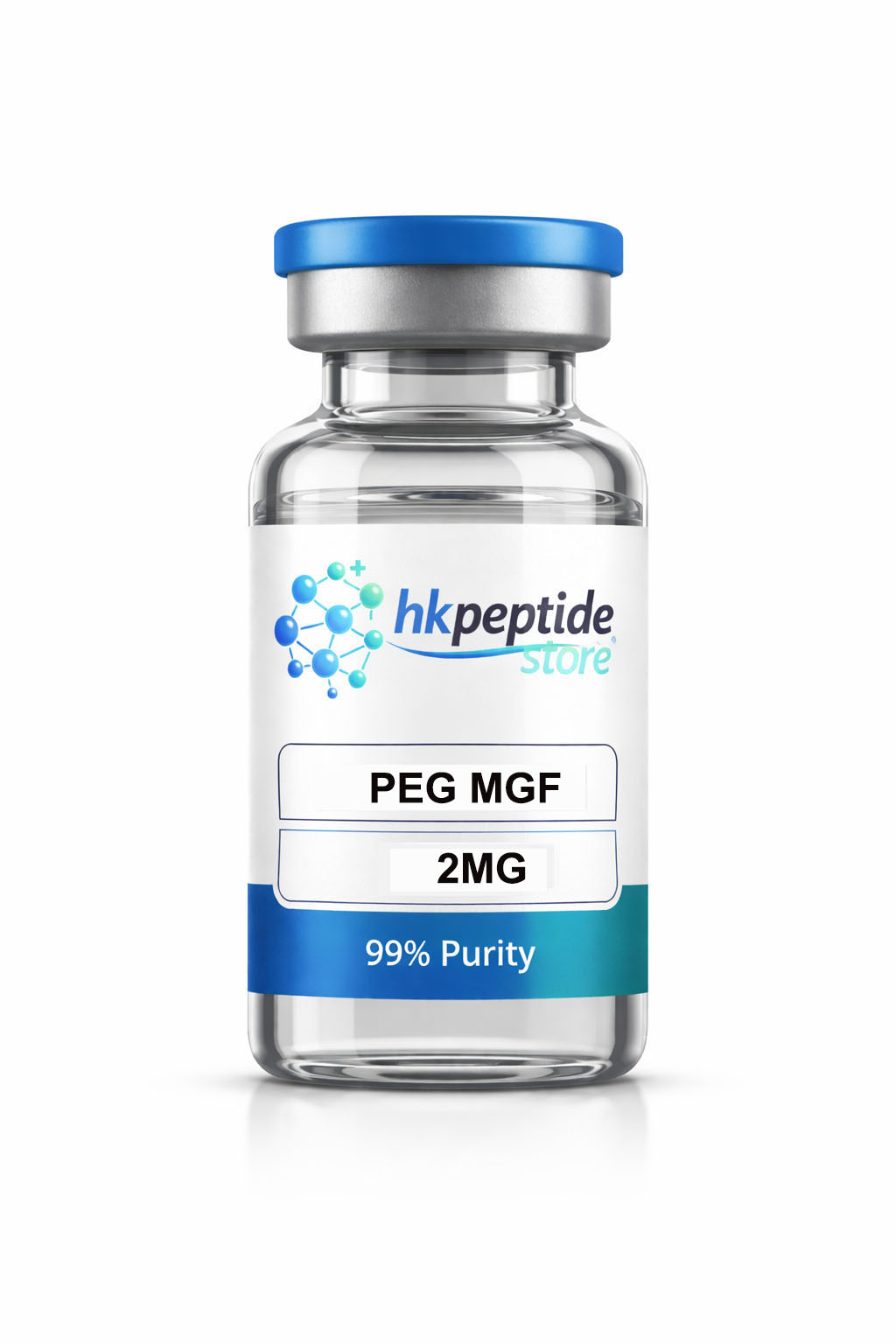
PEG MGF 2MG
Original price was: $123.00.$113.00Current price is: $113.00.
Cost For 10 vials
PEG MGF 2mg is a PEGylated version of Mechano Growth Factor (MGF) designed for advanced laboratory research. The polyethylene glycol modification enhances peptide stability and extends its activity, making it valuable for studies involving growth factor signaling, tissue regeneration, cellular adaptation, and muscle-related biological pathways. This product is intended strictly for research purposes only and is not for human consumption, therapeutic use, or medical application.
PEG MGF 2mg Research Peptide Overview
PEG MGF 2mg is a polyethylene glycol-modified version of Mechano Growth Factor ( MGF) a naturally occurring variant of Insulin-Like Growth Factor-1 (IGF-1). The addition of polyethylene glycol (PEG) extends the peptide’s stability and half-life, making it a popular compound in laboratory and scientific research. Researchers utilize PEG MGF to investigate cellular signaling pathways, muscle tissue responses, regenerative mechanisms, and various biological processes associated with growth factors.
In scientific environments, PEG MGF has gained significant attention due to its unique structure and prolonged activity compared to unmodified MGF. The peptide is often studied for its interaction with cellular repair mechanisms and its potential role in supporting tissue regeneration models. Its extended circulation time allows researchers to evaluate long-term biological responses in controlled laboratory settings.
PEG MGF 2mg is intended strictly for research purposes only and is not approved for human consumption, therapeutic use, or medical treatment. All studies involving this peptide should be conducted by qualified professionals in appropriate laboratory settings.
Understanding PEG MGF
What Is PEG MGF?
PEG MGF stands for Polyethylene Glycol Mechano Growth Factor. MGF itself is a splice variant of IGF-1 that is naturally expressed in muscle tissue following mechanical stress or injury. Scientists have modified this peptide by attaching a polyethylene glycol molecule, which significantly increases its stability and resistance to rapid degradation.
This modification allows researchers to observe biological activity over extended periods, making PEG MGF an attractive option for laboratory investigations focused on tissue adaptation and regenerative biology.
Structure and Characteristics
PEG MGF consists of the active MGF peptide sequence combined with a PEG chain. This modification enhances molecular stability and may improve the peptide’s persistence in experimental models. Researchers value these characteristics when studying growth factor behavior, receptor interactions, and cellular responses over time.
Research Applications of PEG MGF 2mg
Muscle Cell Research
PEG MGF is frequently investigated in studies examining muscle cell activity and adaptation. Scientists use the peptide to explore how growth factors influence cellular communication, tissue remodeling, and muscle-related biological pathways.
Research models often focus on understanding how cells respond to mechanical stress and how specific signaling molecules contribute to adaptation processes.
Regenerative Biology Studies
One of the most common areas of PEG MGF research involves regenerative biology. Researchers examine the peptide’s potential influence on cellular repair mechanisms and tissue regeneration pathways. These studies help improve scientific understanding of growth factor activity and biological recovery processes.
Growth Factor Signaling Investigations
Growth factors play essential roles in cellular communication. PEG MGF is used in laboratory settings to evaluate signaling pathways that regulate cell growth, differentiation, and maintenance. Such studies contribute to broader knowledge regarding molecular biology and physiological regulation.
Experimental Tissue Models
Researchers may incorporate PEG MGF into experimental tissue models to evaluate cellular responses under controlled conditions. These investigations can provide valuable insights into biological adaptation and regeneration mechanisms.
Potential Advantages of PEG MGF 2mg for Research
Extended Stability
The PEGylation process significantly increases the peptide’s stability compared to standard MGF. This allows researchers to conduct studies involving longer observation periods without rapid degradation of the compound.
Enhanced Research Flexibility
The prolonged activity profile of PEG MGF can support a wide range of laboratory investigations, including long-term cellular and tissue studies. This flexibility makes it a useful tool for scientific exploration.
Valuable Growth Factor Model
PEG MGF serves as an important model for studying growth factor biology. Researchers can investigate receptor interactions, cellular signaling, and biological responses associated with tissue adaptation and repair.
Consistent Laboratory Performance
When properly stored and handled, PEG MGF can provide reliable performance in research environments, supporting reproducible experimental outcomes.
Limitations and Considerations
Research Use Only
PEG MGF 2mg is intended exclusively for laboratory and scientific research purposes. It is not approved for human consumption, veterinary use, or clinical application.
Limited Human Data
Much of the available information regarding PEG MGF originates from experimental and preclinical research. Additional studies are necessary to further understand its biological properties and mechanisms of action.
Proper Storage Requirements
To maintain peptide integrity, researchers should follow recommended storage guidelines. Improper handling may affect stability and experimental reliability.
Experimental Nature
PEG MGF remains an investigational research compound. Researchers should carefully design studies and interpret findings within the context of controlled laboratory conditions.
Storage and Handling Guidelines
Recommended Storage Conditions
PEG MGF 2mg should typically be stored according to manufacturer recommendations to maintain peptide stability. Refrigeration or freezer storage may be appropriate depending on the formulation and research requirements.
Laboratory Best Practices
Researchers should utilize sterile handling procedures, appropriate laboratory equipment, and controlled storage conditions to preserve the quality and integrity of the peptide throughout experimental use.
Why Researchers Choose PEG MGF 2mg
Scientists continue to explore PEG MGF due to its extended stability, unique growth factor properties, and relevance to regenerative biology studies. The peptide offers opportunities to investigate cellular adaptation, tissue responses, and molecular signaling pathways in controlled research environments.
As interest in peptide science continues to grow, PEG MGF remains a valuable compound for laboratories seeking to expand their understanding of growth factor biology and tissue-related research models.
Research Use Disclaimer
PEG MGF 2mg is supplied strictly for laboratory research purposes only. This product is not intended for human consumption, medical use, therapeutic application, or diagnostic procedures. All research should be conducted by qualified professionals in properly equipped laboratory facilities.
Frequently Asked Questions
Is PEG MGF 2mg intended for human consumption?
No. PEG MGF 2mg is strictly intended for laboratory research purposes only and is not approved for human consumption or medical use.
What does PEG stand for in PEG MGF?
PEG stands for Polyethylene Glycol, a modification added to the peptide to improve stability and extend its duration in research models.
Why is PEG MGF used in scientific research?
Researchers use PEG MGF to study growth factor signaling, tissue adaptation, regenerative biology, and cellular communication pathways.
How should PEG MGF 2mg be stored?
Storage should follow the manufacturer’s recommendations. Proper refrigeration or freezing conditions are typically used to maintain peptide stability.
What makes PEG MGF different from regular MGF?
The addition of polyethylene glycol increases the peptide’s stability and half-life, allowing researchers to conduct longer-duration studies compared to standard MGF.
Be the first to review “PEG MGF 2MG”
Related products
Pure Peptides
Pure Peptides
Pure Peptides
Pure Peptides
Pure Peptides
Pure Peptides
Pure Peptides
Pure Peptides
Reviews
There are no reviews yet.